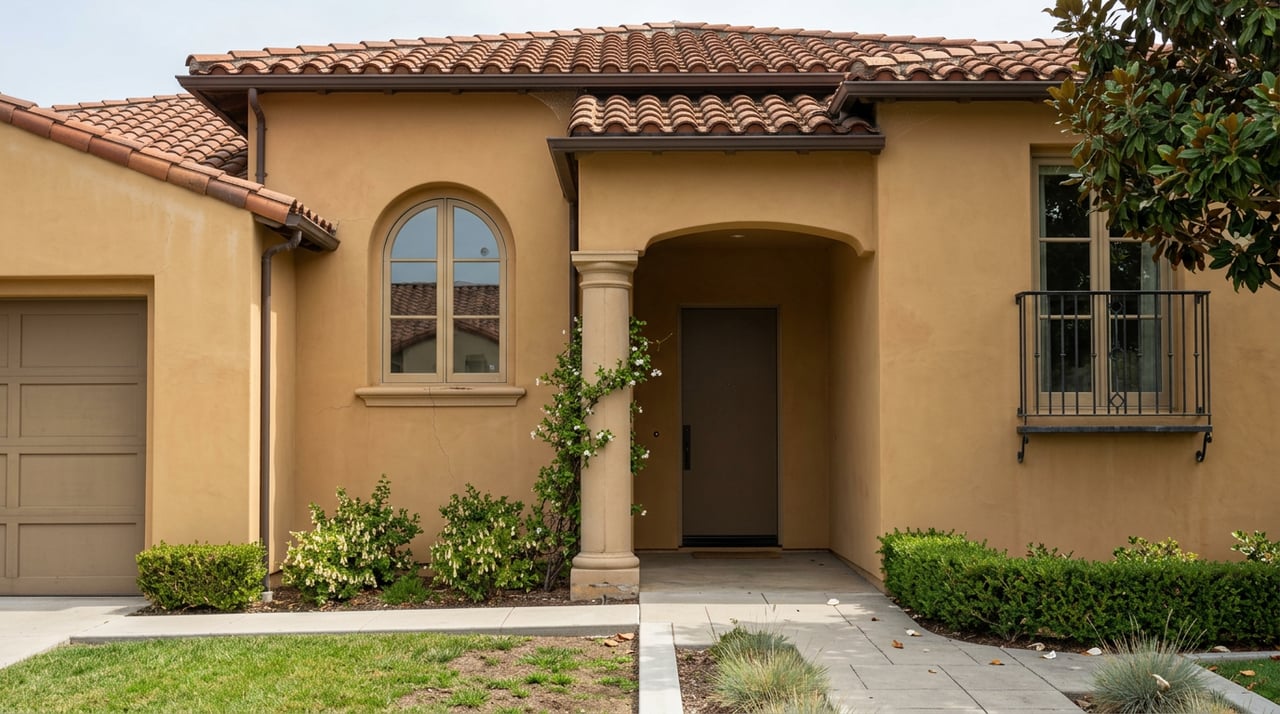
A buyer walks the deck on Flagship Drive at golden hour, watches the ferry cut across toward San Francisco, and decides this is the one. The offer goes in. Escrow opens. Then the title report lands, and somewhere in the recorded documents is language the listing photos never mentioned: a land use control tied to the property's history as part of a working Navy shipyard.
This isn't a scare story. Most Mare Island parcels sold today, especially the two-story Mission Revival and New Traditional homes built around 2005 near Crescent Park, closed years ago. But Mare Island carries a transaction wrinkle that the rest of Vallejo doesn't, and it's worth understanding before you're deep into a contingency period, not after.
The document that isn't a home inspection
Mare Island Naval Shipyard closed in 1996 after more than a century as the first U.S. Navy base on the West Coast. The federal government still lists it as an active Superfund site with the EPA, and that status comes with a mechanism most buyers have never encountered: recorded land use controls, or LUCs, that stay attached to specific parcels through the deed itself.
ProPublica reports that, where they apply, these controls can require a documented barrier, such as a paved surface or a landfill cap, to stay in place to prevent exposure to contaminants. They can require gates or doors to remain locked over a controlled area. They require written notice to regulators and property owners before any change in land use or ownership, and in some cases they call for annual written certification that the property remains in compliance. None of this shows up in a walkthrough. It shows up in a title search and in the environmental history a good escrow team pulls before you remove contingencies.
The practical takeaway isn't to avoid Mare Island. It's to ask early, before you're financially committed, whether the specific parcel you're bidding on sits inside a reuse area that still carries active controls, or whether it was fully cleared for unrestricted residential use during the transfer process. That's a question for your title company and your agent to run down together, not something to discover during the loan contingency.
Two prices, one neighborhood
Ask what a Mare Island home costs and you'll get two different answers depending on which number someone hands you. Over the trailing twelve months, the median sale price on the island came in around $695,000, down 7 percent from the twelve months before that. Over the same stretch, the average sale price sat closer to $783,833, essentially flat compared to the prior year.
A falling median next to a flat average is the kind of gap that tells you something the headline number hides. It means the bulk of ordinary resales softened while a smaller group of higher-priced sales, likely newer construction, water-facing lots, or larger floor plans, held their value and kept pulling the average upward. If you're selling a standard four-bedroom off Flagship Drive, pricing against the average overstates what your specific home will fetch. If you're buying and comparing "median Mare Island price" to a listing near the water, you're comparing two different markets that happen to share a mailing address.
The Mills Act question almost nobody on the island can answer yes to
Vallejo participates in the Mills Act, the state program that grants property tax relief to owners who commit to maintaining a historically designated building for at least ten years. It's a real benefit, and the city's planning division actively processes applications for it. Given Mare Island's naval history, it's a natural question for a buyer to ask: does this discount apply here?
For most of what's currently for sale, the honest answer is no. To qualify, a property has to be individually designated as a landmark, listed as a contributing resource within a legal historic district, or entered on the National or California Register of Historic Places. The homes making up the bulk of Mare Island's residential inventory, the Mission Revival and New Traditional builds from the mid-2000s, are recent construction, not historic register properties. The genuinely historic stock on the island, buildings tied to the shipyard's working era, sits mostly in commercial, institutional, or redeveloped use rather than the open resale market. If you're drawn to Mare Island partly because it feels historic, that's a fair reason to buy there. It's not, on its own, a reason to expect a Mills Act tax break on the house you're actually closing on.
Why so many offers here carry a VA contingency
Vallejo's broader housing stock grew up around the same Navy shipyard, and the city still carries a substantial veteran population as a result. VA financing shows up widely across local transactions, and Mare Island is no exception. That matters for both sides of a deal: appraisal and property condition requirements follow VA guidelines specifically, something a listing agent should prepare a seller for before the offer arrives.
There's a second financing detail worth knowing if you're pricing toward the upper end of the island. Vallejo's conforming and FHA loan ceilings, according to JVM Lending, sit above the citywide median, so most purchases here get financed conventionally or through FHA rather than jumbo. But a well-appointed home on Mare Island can clear the FHA limit while still landing comfortably inside conforming territory, which shifts the likely buyer pool toward conventional financing at that price point. And if the property in question is a condo inside one of the island's redeveloped historic buildings, expect the loan to get underwritten twice, once on the buyer and once on the building itself, covering owner-occupancy ratios, reserve balances, and any pending litigation before a lender signs off.
The island is still being built, and that pace is part of what you're buying
Mare Island today isn't a finished neighborhood so much as a decades-long project still in motion. The developable land is controlled by the Nimitz Group, with Southern Land Company acting as master developer under the joint name Mare Island Company, and that team has been working through a new Specific Plan with the City of Vallejo. As of an April 2026 city council update, the plan was still moving through revision after the city sent Mare Island Company a consolidated comment letter that February, asking for more detail on infrastructure and financing before the next draft advances.
Part of why the north end of the island has taken this long traces back to a soil problem identified years ago: ground in that section was found waterlogged enough to liquefy in an earthquake, a fix developers once priced in the tens of millions of dollars to correct by importing dry fill. That kind of finding doesn't resolve quickly, and it's a reasonable part of why buildout on the northern parcels has lagged the historic core near the ferry terminal, where Touro University, Savage & Cooke, Mare Island Brewing Company, The Quarters coffee shop, and St. Peter's Chapel with its Tiffany stained glass have already anchored a working district.
The most recent jolt to that momentum came from the employment side rather than the land itself. In February 2026, Hoodline reported that Harbinger Production, the modular housing manufacturer that grew out of Factory OS and operates from Building 680 on the island, had filed notice of roughly 290 potential layoffs, part of a wider run of Solano County plant closures that local officials said could ripple into thousands of job losses countywide. None of this changes what a house on Mare Island is worth today. It does mean that anyone weighing the island's long-term trajectory, especially an investor looking at the commercial and light-industrial side of the market, should treat "regional destination" as a real but unfinished thesis rather than a guarantee already priced in.
A few questions that come up
Does every home on Mare Island have an environmental land use control attached to it? A title search and environmental history check will tell you definitively for any specific address.
Can I use an FHA loan on Mare Island? Often, yes, since the city's FHA ceiling sits above the citywide median. But well-appointed Mare Island homes can price above that ceiling while still qualifying for conventional financing, so it's worth having your lender run the numbers against the specific listing price rather than assuming FHA fits every home on the island.
If I buy an older building on the island, do I automatically get the Mills Act discount? No. The property has to carry an actual historic designation, either as an individual landmark, a contributing resource in a legal historic district, or a listing on the National or California Register. Age and naval history alone don't qualify a home. Your agent or the city's planning division can confirm a specific property's status before you factor a tax break into your offer.
Mare Island rewards buyers and sellers who do the homework early rather than at the eleventh hour of escrow. If you're weighing an offer there, or thinking through how to position a Mare Island listing against a market that's telling two different stories depending on which average you read, The Company Real Estate works these transactions from the Tennessee Street office down the road and can walk the title history, financing path, and current development context with you before you're locked into a decision. Contact Us when you're ready to look at a specific address.
This article is general information, not legal, tax or financial advice. Consult a qualified professional about your situation.