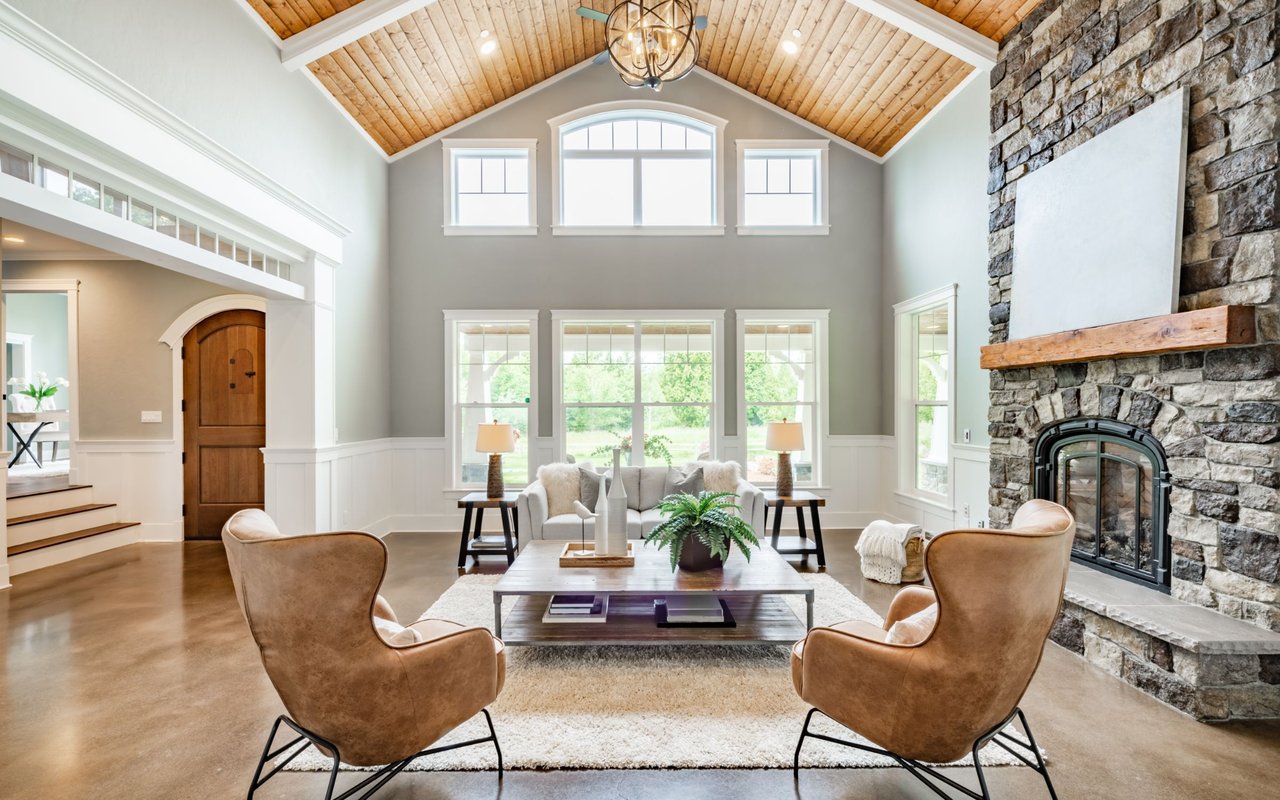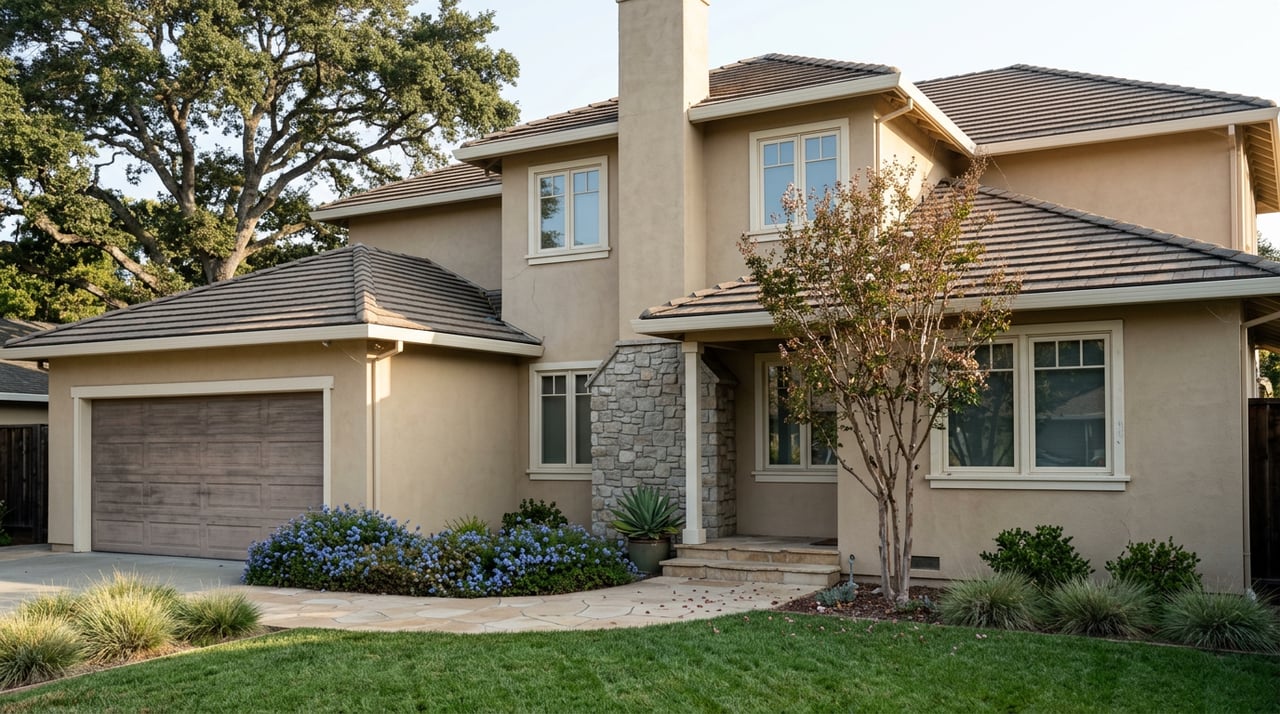
Two listings, same week, same rough price. One sits in Alamo Terrace, custom-built decades ago on a lot with hill views and no HOA. The other is a newer floor plan in a development still filling in its final phases, close to Travis Air Force Base and the freeway. A buyer comparing them on price alone would call it a coin flip. Pull the tax bill on each parcel and it stops being one.
That is the friction nobody mentions until escrow: in Vacaville, a special tax tied to police and fire funding can attach to a home and stay there for as long as the house stands. Not for twenty years. Not until a bond gets paid off. The city's own finance office describes these special taxes as continuing in perpetuity, adjusted upward every year by a cost-of-living formula. That single fact changes what the median price in this city actually means, and it is worth understanding before you fall for a floor plan.
What most Mello-Roos explainers get wrong about Vacaville
If you've shopped anywhere else in California, you've probably absorbed the standard version of this story. A Community Facilities District, known informally as Mello-Roos, forms when a developer needs to fund roads, sewers, or schools in a new subdivision. The district issues bonds. Homeowners inside the boundary pay a special tax to retire those bonds. Once the debt is paid off, usually within 20 to 40 years, the tax goes away.
That pattern holds in a lot of California suburbs. It does not hold the same way in Vacaville.
Vacaville's Community Facilities Districts were built for a different job. According to the city's finance office, these CFDs exist mainly to fund the additional police and fire services required when vacant land converts into new residential neighborhoods. The city's own program page states plainly that the special taxes levied under these districts do not expire but continue in perpetuity, with an annual cost-of-living adjustment layered on top. There is no bond to pay off and retire. The service the tax funds, staffing a patrol car or a fire engine for a growing subdivision, doesn't end just because the original construction loan would have.
The Fire Station #74 example, and why newer CFDs escalate differently
The clearest illustration is CFD 1, the oldest of Vacaville's districts, formed back in the 1980s. Its special tax rate is the lowest in the city's current lineup, and the city explains why: it was structured to fund 25 percent of the cost of Fire Station #74. That's a fixed, modest slice of one facility, set decades ago, still adjusting with inflation every year since.
Compare that to CFDs 8 through 12, the newer districts covering more recent development. These use a different inflation index, the Bureau of Labor Statistics' CPI series for urban wage earners in the San Francisco-Oakland-Hayward region, chosen specifically because Solano County sits inside that Bay Area cost-of-living orbit. A newer CFD escalates against Bay Area inflation every single year, with no scheduled end date, because there is no bond countdown to reach zero.
This is the part a median sale price cannot show you. Two homes can list at the same number and carry entirely different long-run carrying costs, and the difference has nothing to do with square footage or finishes.
Where this actually shows up on the ground
You can see this mechanism working itself out in how Vacaville listings market themselves. Search recent listings in the newer phases of Vanden Ranch and you'll find agents advertising "No Builder Bonds (No Mello-Roos)" as a selling point, right alongside the floor plan details, because in that specific pocket of new construction the absence of a special tax is unusual enough to highlight. A listing in North Village, similarly new, flags "LOW Mello-Roos" as a feature rather than a warning, which tells you plenty about how buyers in that price range have learned to ask the question first.
Move to the city's older, established neighborhoods and the conversation changes entirely. Homes in Browns Valley, tucked against rocky hillside views, or in Foxboro near Arlington Park and Travis Air Force Base, or in Crestview's court layouts, rarely come with a Mello-Roos line in the listing at all. These are neighborhoods that predate the CFD structure or sit outside its boundaries. The custom homes of Alamo Terrace in north Vacaville, prized for scenic surroundings and long-held pride of ownership, fall into the same category. No special tax to disclose because there was never a district to annex them into.
That contrast, older neighborhoods with no CFD exposure against newer ones where it's now a marketed absence, is the clearest sign that Vacaville buyers have already started pricing this mechanism into their decisions. The question is whether every buyer has caught up.
What the citywide median is actually hiding
Here's where the numbers get interesting. As of August 2026, Vacaville's citywide median list price sat at $674,000, working out to about $336 per square foot, with homes spending a median of 63 days on the market. Downtown Vacaville, over the three months ending in July 2026, told a different story: a median sale price of $531,000, but a higher $366 per square foot, and homes moving faster, in about 42 days.
Read those two numbers side by side and the obvious explanation is that downtown homes are simply smaller and older, which pushes the per-square-foot price up even as the total price comes down. That's true as far as it goes. But it also means a downtown buyer is very likely purchasing outside any CFD boundary altogether, since the special tax districts were built around new development, not the historic core. The lower total price and faster sale pace downtown reflect not just smaller lots and older stock but the absence of a tax obligation that never sunsets.
A buyer weighing a $531,000 downtown bungalow against a $674,000 home in a newer subdivision isn't just weighing $143,000 in purchase price. Depending on which CFD, if any, the newer home sits inside, that gap can widen or narrow every single year for as long as the buyer owns the house, because one side of the comparison has an escalating, permanent line item and the other does not.
A quick way to see the difference before you write an offer
Before falling for a specific floor plan or neighborhood, a few minutes of homework settles the question for good.
- Look up the property by address on the Solano County Tax Assessor's site to see the current, comprehensive tax detail for that specific parcel
- Check the city's CFD boundary map, which shows "No results found" for any parcel that falls outside every district
- Ask for the Notice of Special Tax during escrow, which sellers are required to provide and which spells out the exact CFD, if any, attached to the home
- Compare the annual CPI adjustment method noted for that CFD, since CFD 1's older formula and the CFDs 8 through 12 Bay Area-linked formula do not escalate at the same pace
None of this shows up in a portal search filtered by price and bedroom count. It shows up in a parcel-level lookup, and it's the kind of homework worth doing before you get attached to a house.
A quick comparison
| Area | Recent price signal | CFD exposure pattern |
|---|---|---|
| Downtown Vacaville | $531K median, $366/sqft, 42 days on market (3 months ending July 2026) | Largely outside CFD boundaries, no perpetual special tax typical |
| Citywide Vacaville | $674K median, $336/sqft, 63 days on market (August 2026) | Mixed, depends heavily on specific development and CFD number |
| Newer subdivisions (parts of Vanden Ranch, North Village) | Varies by phase and floor plan | Some phases market explicit absence of Mello-Roos, others carry it |
| Established neighborhoods (Browns Valley, Foxboro, Alamo Terrace, Crestview) | Generally outside CFD structure | Rarely carries an active special tax |
A few questions that come up
Does the special tax go away once I pay off my mortgage? No. The CFD special tax is separate from your mortgage and separate from the county's base property tax. It's levied annually as part of the property tax bill regardless of loan status, and in Vacaville's case, the city states it continues in perpetuity with no scheduled end.
Can I negotiate the CFD out of a home I want to buy? Not directly. The tax is attached to the parcel, not to the current owner, so it transfers with the property. What you can do is factor the annual amount into your offer and your lender conversation, since Fannie Mae and Freddie Mac guidelines require special taxes to be counted in your qualifying debt-to-income calculation.
Is a home with a CFD a worse investment than one without? Not automatically. Newer CFD-funded neighborhoods often come with amenities and services that older areas built without that funding mechanism. The point isn't that one is better. It's that the citywide median price doesn't tell you which kind of home you're looking at, and that distinction changes your real monthly cost for as long as you own the place.
If you're comparing Vacaville neighborhoods and want someone to pull the actual parcel-level tax detail before you write an offer, that's the kind of groundwork The Company Real Estate walks through with buyers every week. Contact us and we'll help you see the full monthly picture, not just the number on the listing.